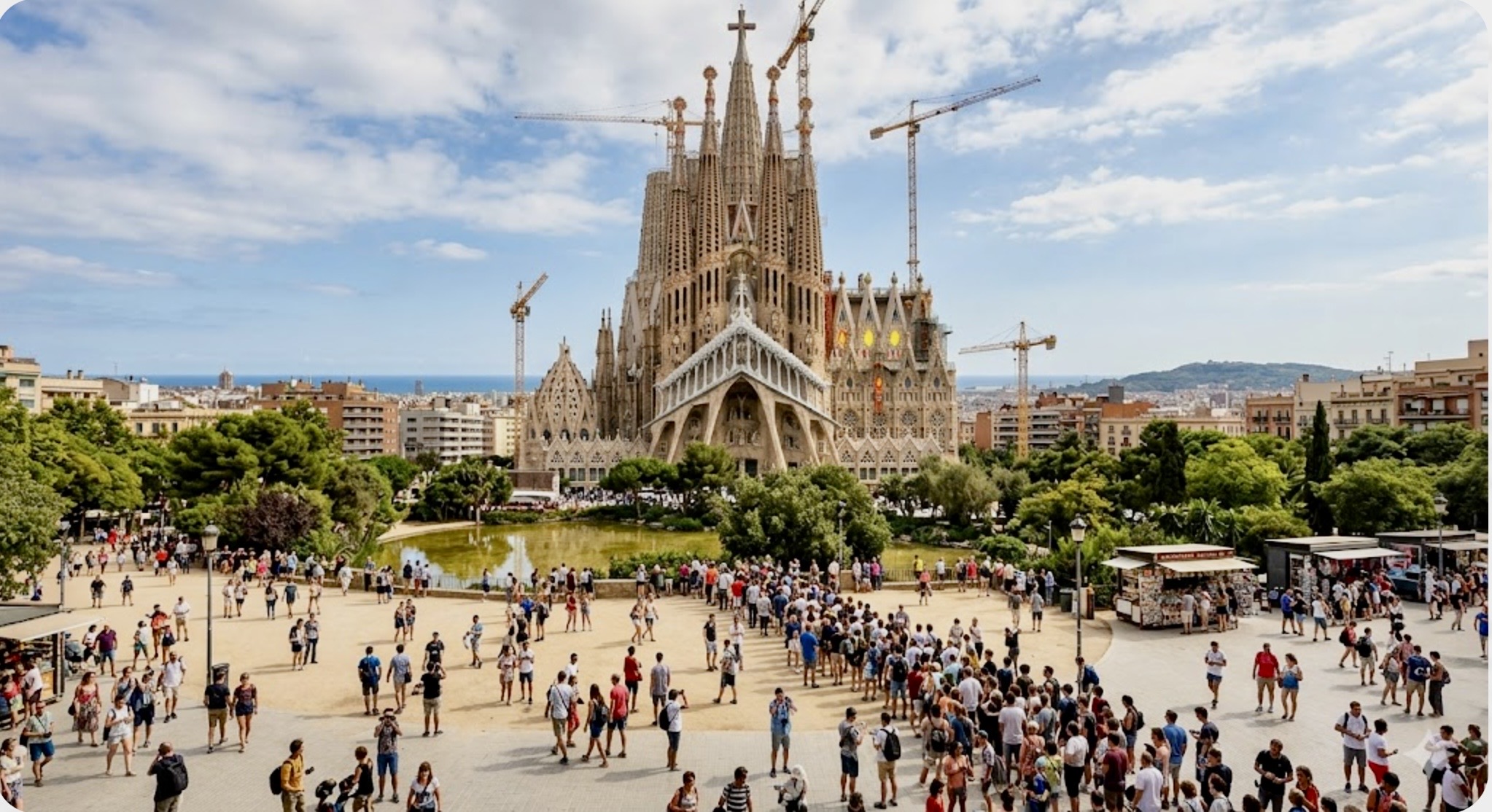
Barcelona
Catalonia · Mediterranean coast · Architecture, beach & table
Barcelona is the most misread city in Spain. Visitors arrive expecting a Spanish city and find a Catalan one — different language, different identity, different pace. The architecture alone is worth the trip: you could spend a week with Gaudí and still not exhaust it. But the city I keep coming back to is the one that lives in El Born and Gràcia, in the menú del día at a proper restaurant at 2pm, in the hour before sunset on Barceloneta beach. For hotels, two properties define what the city offers at the top end.
Explore the city further: TravelWyn’s Barcelona destination guide →
Hotel Arts Barcelona
The Frank Gehry fish sculpture outside is the landmark; the rooms looking north across the city are the reason to book. A Ritz-Carlton property with genuine beachfront access — rare for a five-star in a major European city. The pool deck works in a way that resort properties rarely achieve in urban settings.
Mandarin Oriental Barcelona
On the Passeig de Gràcia — Barcelona’s premier boulevard, lined with Modernisme architecture — the Mandarin converts what was once a bank building into something genuinely beautiful. The spa terrace and Moments restaurant (two Michelin stars) are the standouts. Walking distance to every major Gaudí building.
Where I Eat in Barcelona
El Born. The patatas bravas are the benchmark. Order the anchovies too. Cash preferred, no reservations needed before 8pm.
Carrer de la Montcada, El Born. Cava bar open since 1929. House cava, anchovies, and the particular quiet of a place that doesn’t need to be discovered anymore.
Alternative to La Boqueria — better food, fewer crowds. The mosaic rooftop by Miralles and Tagliabue is extraordinary. Tuesday and Thursday mornings are the right time.
“Barcelona taught me that luxury doesn’t have to apologize for its location. The Hotel Arts has the beach. The Mandarin has the boulevard. Both earn their rates every night.”
Cultural Essentials
Sagrada Família: Book tickets 3–4 weeks ahead. The interior — not the exterior — is the revelation. The branching columns and stained glass will stop you mid-stride. Plan two hours minimum. Casa Batlló on the Passeig de Gràcia is the second stop; the rooftop at dusk is the best urban panorama in the city. Park Güell: arrive before 9am or after 6pm to see it at human scale.
Barcelona Insider Notes
- Dining clock: Lunch at 2pm–4pm. Dinner at 9pm–11pm. Restaurants that open for dinner before 8:30pm are open for tourists. Go to the later ones.
- Las Ramblas: Walk it once, early morning, for context. The pickpocketing rate is among the highest in Europe. The city’s actual street life is on the parallel streets.
- Language: Catalan is the first language. Spanish is spoken everywhere. Do not mistake Catalan for a regional dialect.
- Menú del día: €14–18 for three courses with wine, bread, and water. The best value in European restaurant dining. Ask for it by name.
Madrid
Castile · Central plateau · Art, cuisine & intellectual life
Madrid is the city that surprises people. They expect a capital and find something more intimate: a city that takes its parks seriously, that eats better than anywhere else in Spain at the mid-range, that has world-class art institutions that don’t require entire days to get through. The light is different here — harder, higher altitude, the plateau behind it. The hotel scene has matured enormously in the last decade. Two properties have redefined what Madrid can offer at the top end.
Hotel Wellington
The Wellington is the hotel that old Madrid understands. On the edge of the Retiro and in the heart of the Salamanca shopping district, it has been the address of choice for bullfighters, politicians, and anyone who requires discretion. The rooms are proper — well-proportioned, properly staffed, zero gimmicks. The bar has the best castañas en aceite in the city.
Madrid EDITION
Ian Schrager’s most European property, and one of the few design hotels that functions as well as it looks. The rooftop bar has the best skyline view in the city; the ground floor restaurant is what hotel dining should be but rarely is. A 2017 property that hasn’t dated, which is harder to achieve than it sounds.
Where I Eat in Madrid
Best visited mid-morning or at lunch. The covered iron market near Plaza Mayor is genuinely good — fresh bocadillos, Iberian ham, oysters. The evening crowd is heavy with tourists; the 11am visit belongs to the city.
Malasana. The cocido madrileño here has been made the same way since 1870. A single dish, slow-cooked, served in two courses. Lunch only. One of the most authentic eating experiences in the city.
Three Michelin stars, eight-course experience, extraordinary technique. Book six months ahead. This is David Muñoz’s restaurant and it is unlike anything else in Spanish fine dining. Worth the planning for the right occasion.
“Madrid has the best ratio of quality to price of any capital in Europe. The mid-range here would be a special occasion in London or Paris.”
Cultural Essentials
The Prado is the non-negotiable — Velázquez and Goya on the scale they deserve, without the pressure of the Louvre. The Reina Sofía has Guernica, and requires less time than you’d think. The Museo Thyssen-Bornemisza fills the gaps between medieval and modern with an exceptional private collection. Do all three in one long day or two easy days. The Retiro Park at dawn — the rowing lake, the Crystal Palace, the discipline of the rose garden — is what city parks aspire to be.
Madrid Insider Notes
- Altitude: Madrid sits at 667m — the highest capital in the EU. The summer heat is intense (40°C in July) but the evenings cool significantly. The winter light is extraordinary.
- Barrios: Salamanca for shopping and old money. Malasana for independent culture and late nights. La Latina for traditional tabernas. Chueca for LGBTQ+ scene and excellent cafes.
- Museum timing: Prado on a weekday morning, Reina Sofía in the afternoon. Sunday admission is free from 5pm–8pm — arrive at 4:45.
- Breakfast culture: The Spanish breakfast is a ritual. A proper churrería with thick chocolate at 9am — Chocolatería San Ginés near Sol has been doing this since 1894.
Seville
Andalusia · Guadalquivir river · Flamenco, tapas & Moorish legacy
Seville in the early morning, before the heat arrives, is one of the great urban experiences in Europe. The Santa Cruz quarter at 7am — the orange trees, the white walls, the cathedral looming at the end of every street — is a place that hasn’t been entirely processed by tourism because the Andalusian heat discourages the kind of all-day wandering that other cities accommodate. Come in April or October. Walk early. The hotels here understand the city they’re in.
Hotel Alfonso XIII
Built for the 1929 Ibero-American Exposition and opened by King Alfonso XIII, this is not a hotel trying to evoke history — it is history that functions as a hotel. The Moorish-Renaissance architecture, the central patio with its tilework and orange trees, the grandeur of the public spaces: this is one of the great hotel properties in Europe. Period.
EME Catedral Hotel
Contemporary design 40 meters from the Cathedral, with a rooftop pool that looks directly at the Giralda tower. Where the Alfonso XIII offers grandeur, the EME offers intimacy and views that no other property in the city can match. The rooftop bar at sunset is the social center of Seville’s hotel scene.
Where I Eat in Seville
La Alfalfa. The original Sevillian tapas bar format: counter seating, standing orders, small plates arriving without menus. The montaditos de pringada are the thing to order. Open from noon.
Multiple locations. Modern Sevillian cooking at honest prices. The creative tapas here — mushroom and foie montadito, tuna tataki with gazpacho — are what happens when Andalusian tradition meets proper technique.
Claimed to be the oldest bar in Seville, operating since 1670. The espinacas con garbanzos (spinach and chickpeas) is a non-negotiable order. Crowded by 9pm; arrive at 7:30 for a seat.
“The Alfonso XIII taught me what a hotel lobby is supposed to do: it should make you feel that the world outside doesn’t operate at quite the same scale as the world inside.”
Cultural Essentials
The Real Alcázar is the more interesting site than the Cathedral for those who have seen Europe’s great churches — Moorish and Mudejar architecture at its most sophisticated, royal gardens that make no sense in a hot climate and are all the better for it. Book timed entry in advance. The Cathedral and Giralda tower — the largest Gothic cathedral in the world — is obligatory, but the tower climb is the real experience. Flamenco: Casa de la Memoria in the Santa Cruz quarter runs intimate evening performances that are the best introduction to flamenco for first-time visitors — not a tourist show, an actual art form.
Seville Insider Notes
- Heat timing: April and October are ideal. July and August are genuinely hostile — 45°C days are possible. If you must go in summer, structure your day around the siesta: early morning walk, hotel from 1pm–5pm, evening activity from 6pm onward.
- Holy Week (Semana Santa): Spectacular and crowded. Brotherhoods carry statues through the streets in processions that can last hours. Book accommodation a year ahead if you want to attend.
- Flamenco: Seville is the birthplace of flamenco. The tourist tablaos are fine but not the point. Ask your hotel concierge for that week’s genuine peña flamenco events — small, local, occasionally extraordinary.
- The Triana neighborhood: Cross the river. The ceramic tradition, the independent bars, the local market — this is the Seville that isn’t on the standard itinerary and is more interesting for it.
San Sebastián
Basque Country · Bay of Biscay · The finest food culture in Europe
San Sebastián — Donostia in Basque — has the highest concentration of Michelin stars per capita of any city in the world. This is not a coincidence or a marketing claim: it is the product of a food culture that treats cooking as the primary form of civic pride. The Old Quarter is 30 minutes of walking end to end; the restaurants within it represent a cumulative technical achievement that you encounter nowhere else. I have been going to San Sebastián for twenty years. The question is never whether to eat well. The question is how many bars you can cover before midnight.
Hotel Maria Cristina
A Luxury Collection property built in 1912, on the banks of the Urumea with a direct view of the Victoria Eugénia Theatre. The film festival makes this the most glamorous hotel in Spain for two weeks in September; the rest of the year it is quiet, beautifully maintained, and the correct base for a city that requires walking everywhere. The service sets a standard that few Basque properties can match.
Akelarre
Pedro Subijana’s three-Michelin-star restaurant with a hotel above it, on a cliff above the Atlantic. The restaurant is one of the founding members of Nueva Cocina Vasca — the new Basque cuisine movement that reshaped European fine dining. The hotel itself is minimal and functional; you are here for the table, the wine list, and the view from the cliffside dining room. Non-negotiable for any serious food visit to the Basque Country.
The Pintxo Route (Do This)
Calle Pescadería. Two things on the menu: tomato salad and a t-bone steak. The steak is served at 1pm and 8pm, a fixed number of portions. Arrive 30 minutes early and put your name on the list. The tomato salad with olive oil is the benchmark for simplicity done correctly.
Old Quarter. The burnt Basque cheesecake was invented here. Order it. The pintxos are also excellent, but the cheesecake is the reason this bar is known in kitchens across the world.
Calle Pescadería. Anchovy specialist. Every pintxo variation involves anchovy in some form. The house version with smoked pepper and oil is a lesson in ingredient selection. Cash only; no reservations; small.
Juan Mari and Elena Arzak’s three-Michelin-star institution. The founding text of modern Basque cuisine, still being written. Book three months ahead minimum. The egg dishes are the signature; the service is faultless.
“San Sebastián taught me that a small city can achieve something a capital cannot: a food culture where excellence is the expectation, not the exception.”
Cultural Essentials
La Concha beach is the most beautiful urban beach in Europe — a perfect crescent bay with calm water and promenade that has changed little since the belle époque. The Peine del Viento (Wind Comb) by Eduardo Chillida, at the western end of the promenade, is the piece of public art I return to most in all my travels. The Old Quarter (Parte Vieja) is small enough to walk in an hour but dense enough to spend three nights in. The San Telmo Museum of Basque history and culture is excellent — one of the best regional museums in Spain.
San Sebastián Insider Notes
- Language: Basque (Euskara) is the first language here, Spanish the second. Basque has no known linguistic relatives; it is genuinely unlike any other language in Europe. A greeting in Basque (Kaixo) is always appreciated.
- Pintxo timing: The bars do pintxos from about 7pm–9:30pm. Go early; the best pieces disappear quickly. Three bars, 45 minutes each, is the correct rhythm.
- Film festival: The San Sebastián International Film Festival runs in September. The Maria Cristina fills with film talent and requires booking a year ahead during that week.
- Day trip: Biarritz is 50 minutes by road — a very different Belle Époque aesthetic, French Basque Country, worth a half day. The coast between Donostia and Biarritz is some of the most dramatic in Europe.
- Surfing: Zurriola beach (east of the river) is a genuine surf break. Equipment rental available at the beach; the wave is consistent from October through April.
Travel Essentials for Spain
The logistics that make the difference between a trip that works and one that requires constant management.
Getting There
Direct flights from most European hubs to BCN, MAD, SVQ, and BIO. Ryanair and Vueling connect all four cities within Spain for under €40 with advance booking. High-speed AVE rail connects Barcelona–Madrid (2h30m), Madrid–Seville (2h30m).
Best Seasons
April–June and September–October. Seville in April (Holy Week aside) is exceptional. San Sebastián in September (film festival) is the cultural peak. Avoid Madrid in August — the city goes on holiday and half the restaurants close.
Money
Euro throughout Spain. Contactless payments universal. Cash still expected at older bars and traditional tabernas. Budget €30–50/day for food eating properly (pintxos + one sit-down meal). The menú del día at lunch is the budget secret: three courses with wine for €12–18.
Languages
Spanish (Castilian) understood everywhere. Catalan in Barcelona (official alongside Spanish). Basque in San Sebastián (try Kaixo). A few words of the local language signals respect and opens doors that guidebook Spanish does not.
Getting Around
Barcelona and Madrid have excellent metro systems. Seville is walkable with a good bike-share. San Sebastián is 30 minutes by foot from one end to the other. Rent a car only if you plan to explore outside the cities — urban parking is a reliable frustration.
Eating Schedule
Breakfast 8–9am. Coffee and a tostada. Lunch 2–4pm — the main meal. Dinner 9–11pm. Fighting the schedule means eating in places that have already given up. Working with it means eating better than almost anywhere else in Europe.
Read the full Hotel GM Picks series
Jay Jayyusi is the founder of TravelWyn and a Task Force General Manager with 30+ years in hospitality. He has opened and operated hotels across Europe and writes about travel, hotels, and the craft of staying somewhere well.


